
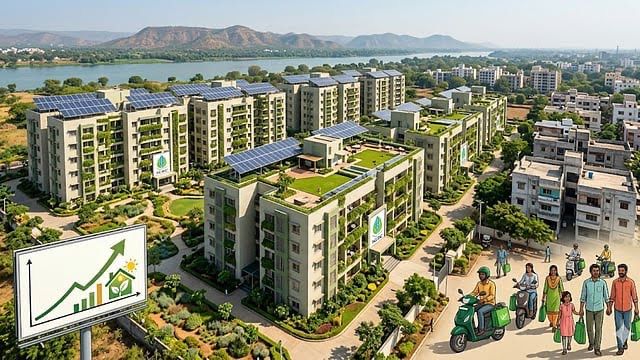
Sustainable and eco-friendly real estate development is expanding beyond major metro cities in India as developers and homebuyers increasingly prioritise green buildings, energy efficiency, and environmentally responsible infrastructure.
Industry experts believe rising environmental awareness, infrastructure growth, and government sustainability initiatives are encouraging developers to adopt green construction practices in Tier-2 and Tier-3 cities as well. Cities such as Jaipur, Indore, Coimbatore, Lucknow, and Chandigarh are witnessing growing demand for projects focused on energy savings, better water management, open spaces, and healthier living environments.
Developers are also focusing on features like rainwater harvesting, solar energy systems, waste management, smart lighting, and green certifications to attract modern buyers and investors. Improved infrastructure connectivity and urban expansion beyond traditional metros are further supporting the rise of sustainable real estate projects across emerging markets.
Experts noted that green real estate is no longer viewed as a luxury concept limited to premium metro projects. Instead, sustainability is gradually becoming an important factor influencing buyer preferences, investment decisions, and long-term property value across India’s broader real estate market.
Key Highlights
- Green real estate demand growing beyond metro cities
- Tier-2 and Tier-3 cities attracting sustainable developments
- Developers focusing on:
- energy-efficient buildings
- water conservation
- solar power systems
- smart infrastructure
- waste management
- Buyers increasingly preferring eco-friendly housing projects
- Infrastructure growth supporting sustainable urban expansion
- Green-certified buildings gaining popularity among investors
- Cities like Jaipur, Indore, Coimbatore, and Chandigarh emerging as growth hubs
- Sustainability becoming a long-term value factor in real estate
Industry observers believe the shift towards green real estate reflects changing buyer priorities and India’s broader transition toward more sustainable urban development practices.
 Original Report Source (Published by Outlook Money):
Disclaimer: The insights referenced above are based on the report published by Outlook Money. Rooftr does not claim ownership of this research and is sharing it for industry awareness purposes.